Built to solve
real operational failures.
Not demos. Not concepts. Each system below runs in production, was commissioned to eliminate a specific process failure, and has a measurable outcome attached to it.
AI Command
Center
A centralized operational command layer designed to provide visibility across client operations, workforce operations, revenue operations, compliance governance, and hiring infrastructure.
Running multiple AI agents across different workflows with no visibility into what's running, what's failing, or how resources are being consumed. Every breakdown required manual investigation.
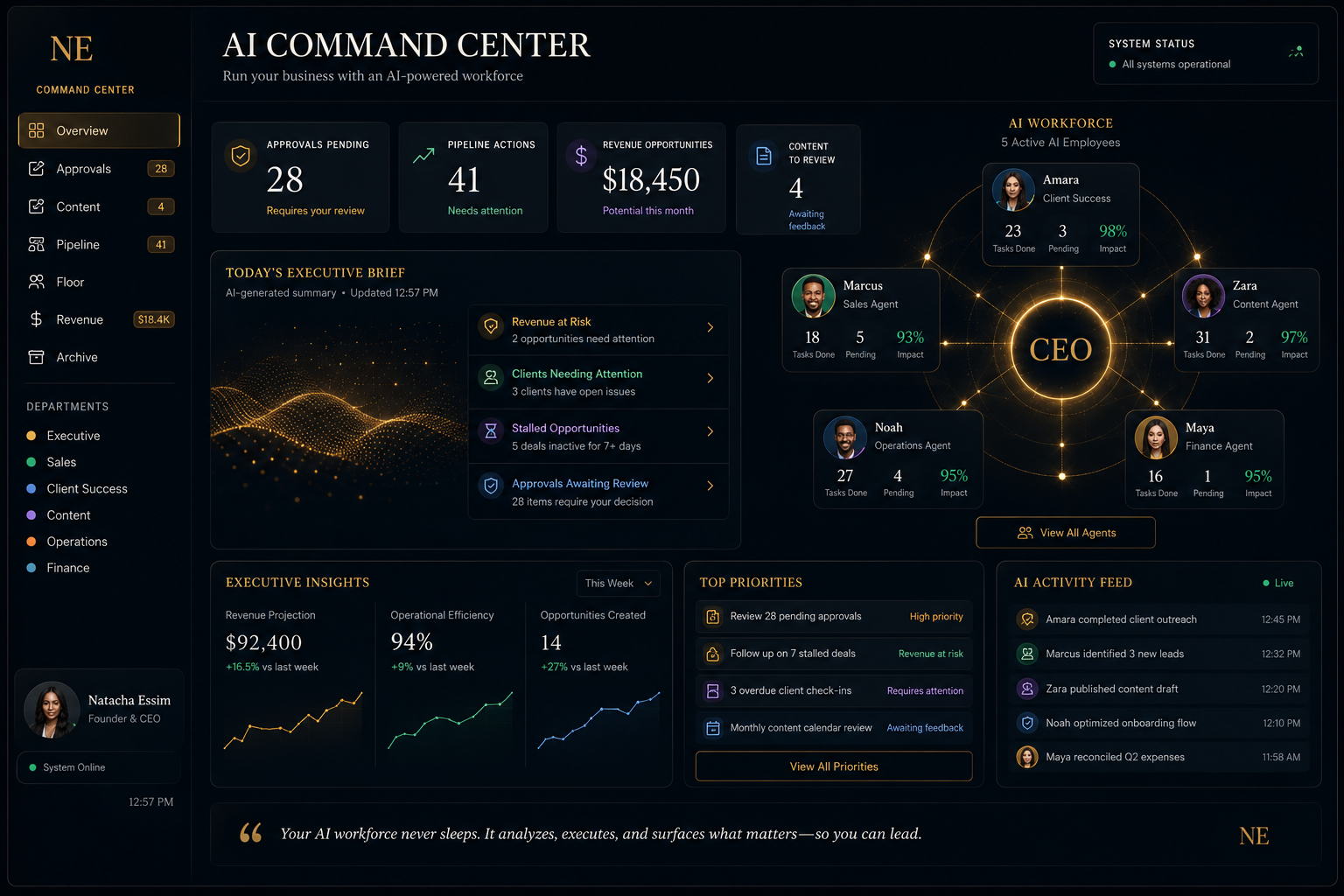
AI Command Center — Real-time agent orchestration dashboard
How It Was Built
Built on edge infrastructure for zero-latency status reads and distributed task queuing. Every agent action is written to an immutable audit log before the UI updates. Automated failure notifications keep the operator in the loop without manual monitoring.
Bel View
Operations Suite
Two connected systems for a home healthcare organization — a mobile caregiver notes portal and a role-isolated timekeeping platform that keeps payroll hours completely separated from PHI and client data.
This system handles healthcare operations data. Client-specific details and operational figures have been omitted. System architecture, feature set, and workflow design are accurate.
Caregiver notes were scattered across emails, personal devices, and Google Drive folders with no consistent structure or submission tracking. Timekeeping data was handled manually with no clean separation between what payroll needed and what contained sensitive caregiver and client information. Management had no real-time visibility into shift compliance or documentation status.
How It Was Built
Both systems are privately deployed with environment-isolated data. Access control is enforced at the API layer — the accountant's session is structurally incapable of returning PHI or client data, not just hidden in the UI. The notes portal is mobile-first to match how caregivers operate in the field. The timekeeping system connects directly to the notes portal via a post-clock-in action, reducing steps between shift start and documentation.
Client
Agreement Hub
Designed to automate agreement creation, delivery, execution, countersignature workflows, and document management.
Agreements sent as email attachments, signed offline, scanned and returned, then stored in Google Drive folders with no consistent naming convention. No visibility into who had signed, who hadn't, which version was active, or when anything happened.
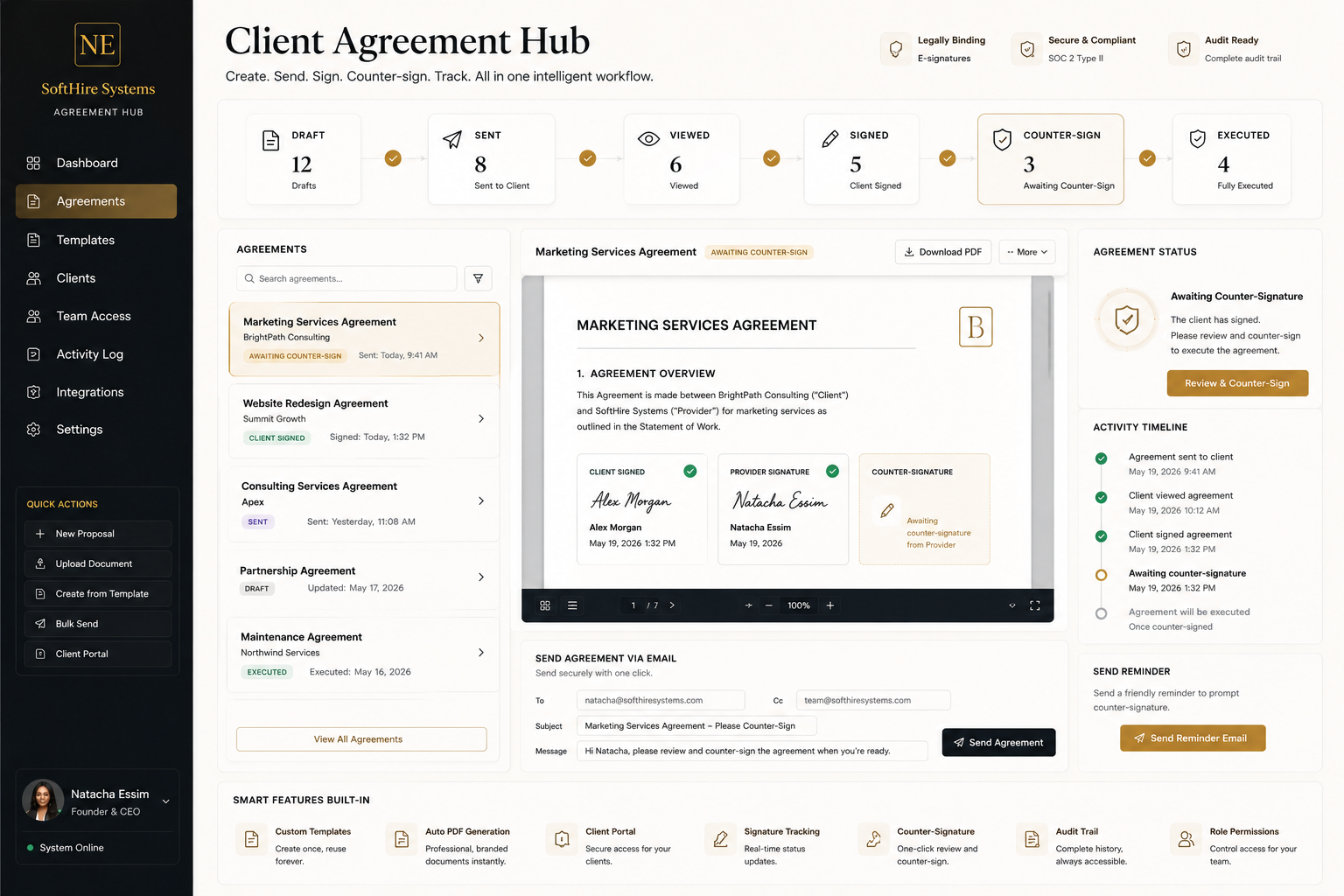
Client Agreement Hub — Admin view with full agreement lifecycle tracking
How It Was Built
All agreement state transitions run server-side through a custom API layer. Each agreement generates a secure, time-limited signing token — clients access their signing page through a unique URL that expires after use. Every state change writes an immutable audit record before responding to the client.
Communications
Hub
A centralized communication environment designed to improve visibility across client interactions.
Sending personalized outreach, onboarding sequences, and client updates manually — one by one — from a personal inbox. No templates, no tracking, no record of what was sent to whom or when. Follow-up was guesswork.
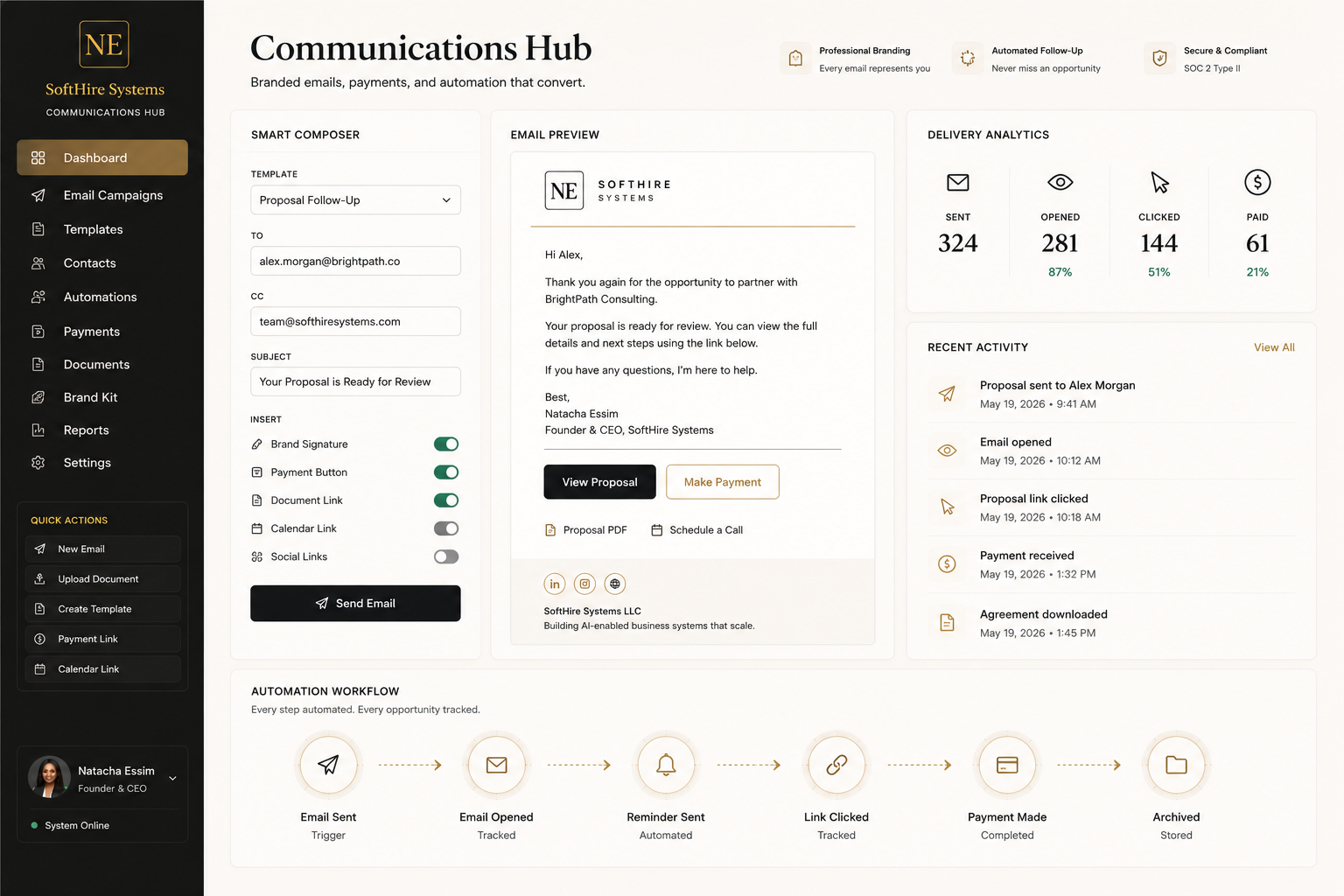
Communications Hub — Template-driven email operations portal
How It Was Built
Admin portal backed by serverless functions for all send operations. Email delivery fires real-time status webhooks so every send record updates as messages reach their destination. Full send history is queryable by recipient, campaign, and delivery status — no manual tracking required.
Subscriber
Intelligence Platform
A custom analytics system that turns a raw subscriber list into an operational intelligence layer — showing who bought what, where they came from, and which content drives consulting revenue.
Building an audience without knowing who was buying, where subscribers came from, or which resources correlated with consulting inquiries. Email provider dashboards showed opens and clicks — nothing about revenue, purchase behavior, or lead quality.
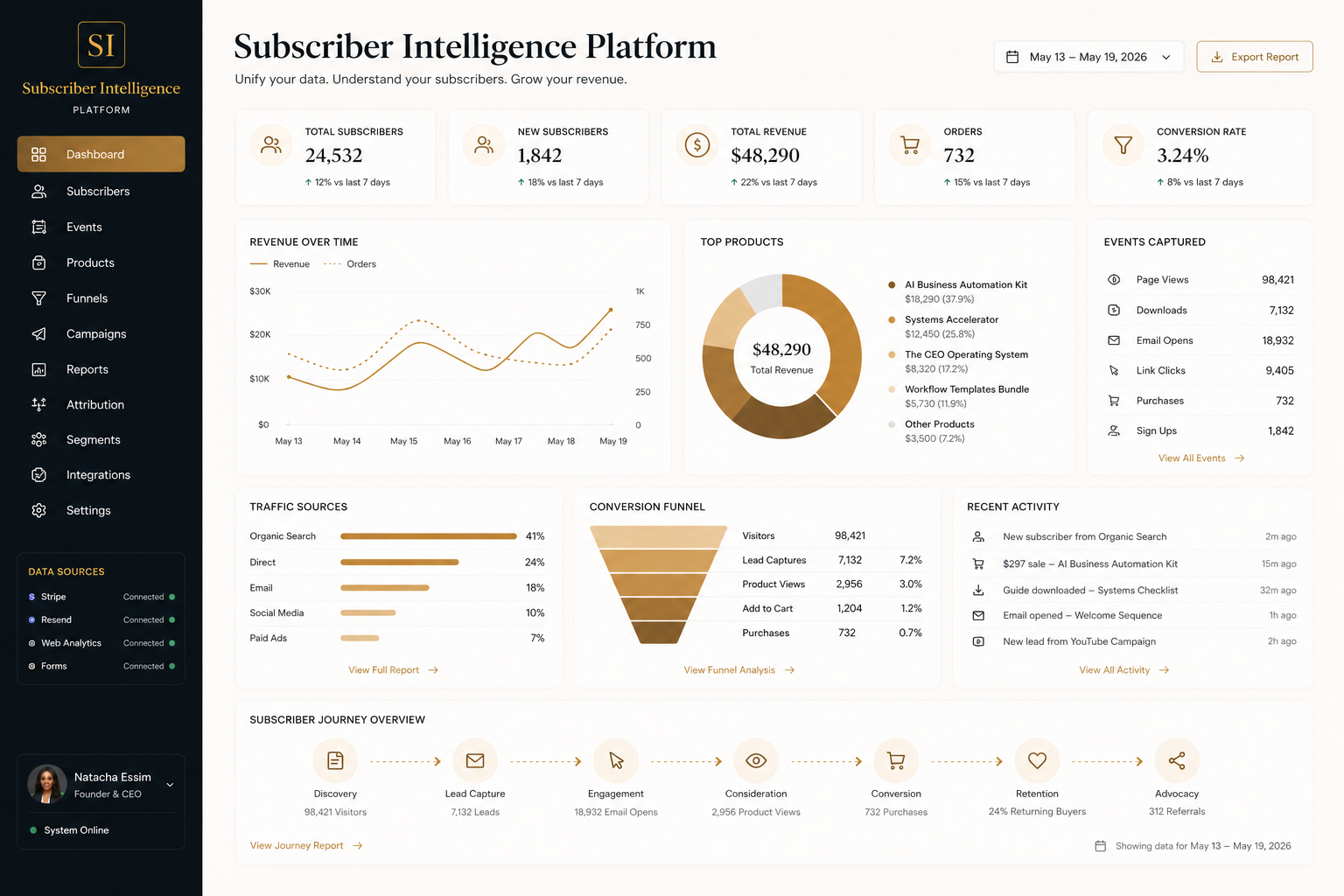
Subscriber Intelligence Platform — Revenue and subscriber analytics
How It Was Built
Built on edge infrastructure for sub-50ms dashboard load times. Behavioral events from payment, download, and email activity are normalized into a single subscriber timeline — no intermediate analytics platform required. The dashboard queries a purpose-built event database directly, producing unified profiles that no off-the-shelf tool generates.
SoftHire Systems
A cross-border hiring infrastructure platform that generates compliant offer letters, employment agreements, welcome letters, signing workflows, compliance guidance, and payroll-ready handoff packages across multiple jurisdictions — powered by one intelligent questionnaire.
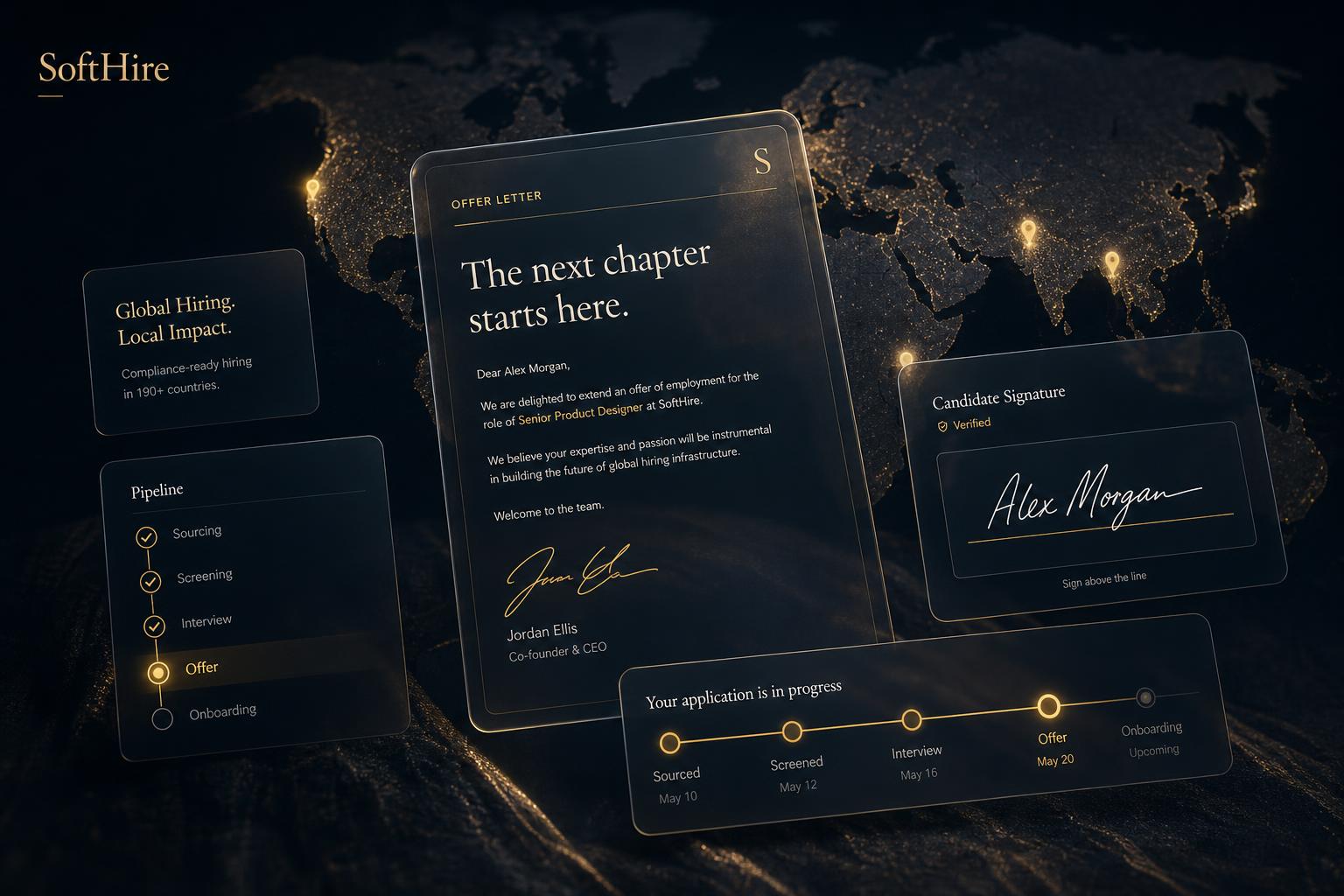
SoftHire Systems — Hiring infrastructure for cross-border employers
SoftHire is infrastructure, not advice. It transforms what is traditionally a fragmented legal and administrative process — researching labor laws, finding contract templates, drafting documents, managing signatures, tracking compliance, preparing payroll onboarding — into a structured, automated workflow. Information is entered once and flows through the entire hiring lifecycle automatically.
Most employers hiring internationally must research labor laws, find contract templates, draft offer letters, draft employment agreements, manage signatures, track compliance obligations, and prepare payroll onboarding — each step manually, each jurisdiction introducing different rules, deadlines, document requirements, statutory registrations, and compliance obligations. The process is repetitive, expensive, and entirely manual.
One Questionnaire. Every Document.
Information is entered once. The platform generates and routes every downstream document, signature, and compliance deliverable automatically.
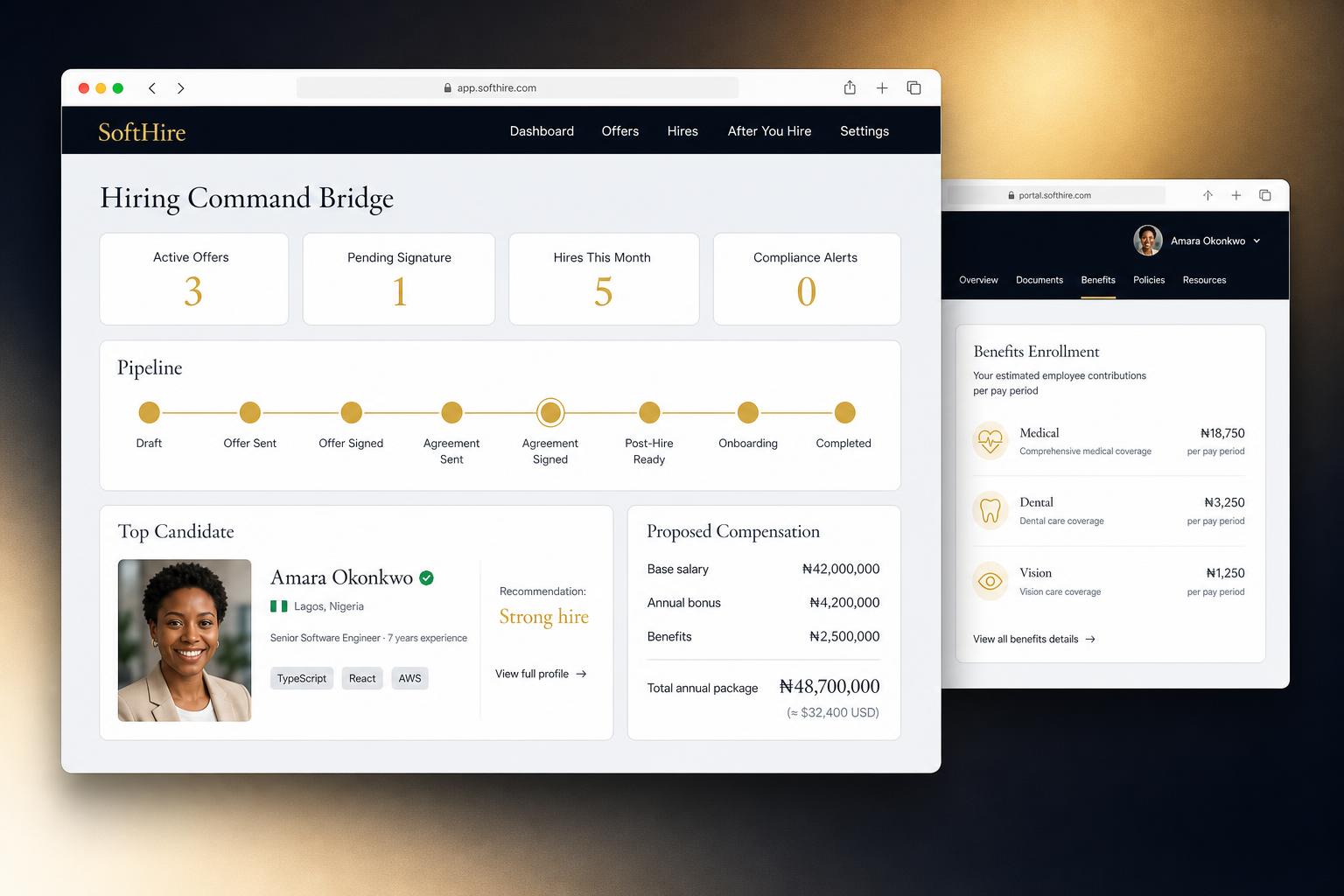
SoftHire Systems — hiring workflow from document generation through signing and payroll handoff
Hiring Infrastructure Available In
How It Was Built
Multi-tenant architecture with fully isolated client workspaces. Jurisdiction-aware document generation runs server-side — producing compliant agreements without relying on third-party signing services. Subscription billing is handled end-to-end within the platform. The compliance record layer is configurable per client without code changes.
SoftHire is being extended into a full hiring infrastructure ecosystem. Current and upcoming modules:
Explore SoftHire In Action
Walk through six hiring scenarios across multiple jurisdictions and experience the complete hiring workflow from document generation through signing and compliance preparation.
Launch Interactive DemoPKME
Event Platform
A centralized event operations environment for inventory, bookings, rentals, deposits, consultation requests, and customer management.
An event decor and rental company managing bookings through phone calls, DMs, and a shared calendar that didn't talk to inventory. Double-bookings happened. Customers didn't know what was available on their date. Delivery pricing was calculated manually per order, with errors.

PKME Event Platform — Page-flip decor portfolio with inventory-linked rental cart
How It Was Built
Lightweight frontend with serverless functions handling all dynamic operations. Inventory and booking records are managed through a structured database that gives the business owner a no-code interface — no custom admin needed. Mileage to the delivery address is calculated at checkout in real time.
Client Onboarding
System
A custom-built, end-to-end system that moves a client from first inquiry through signed contract, deposit, and into an active project portal — with no manual hand-off steps between stages.
Client onboarding ran across a patchwork of emails, shared PDFs, manual follow-ups, and disconnected tools. There was no single source of truth, no enforcement of sequence, and no way to know where a prospect was in the process without checking multiple places. Contracts sat unsigned. Invoices sat unpaid. Nothing moved forward on its own.
How It Was Built
No CRM subscription, no third-party signing platform, no generic project management tool — built from scratch on serverless infrastructure. Every stage is enforced by the system: nothing moves forward without the right step completing first. Agreements are generated and signed in-browser, stored as branded PDFs, and the entire client record — from inquiry to handover — lives in a single structured database.
Ready to build a system
that actually runs itself?
If you have a process that's costing you time, people, or compliance risk — let's look at whether a system can solve it.
Connect